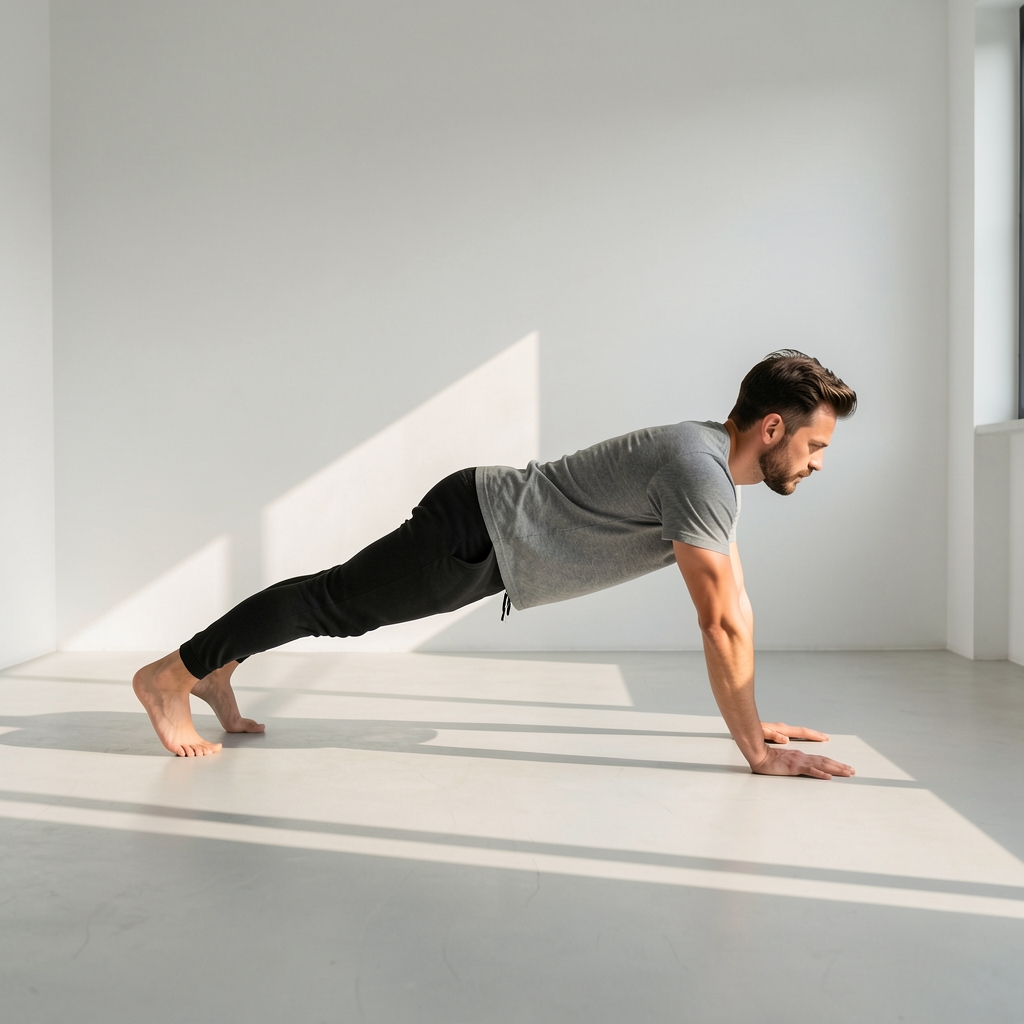
Oravelin was founded in London with a single editorial objective: to produce movement documentation that functions in real domestic environments. Not aspirational gym footage. Not equipment lists requiring capital outlay. Structured, evidence-referenced sessions that begin with a mat on a living room floor.
The resource emerged from observation that a significant portion of individuals who begin structured exercise programmes do so without access to consistent gym facilities — whether for reasons of cost, location, time, or preference. The existing documentation available to these individuals ranged from poorly sequenced to outright contradictory.
Oravelin addresses that gap methodically. Sessions are documented, not promoted. Progressions are indexed, not assumed. The language throughout is observational rather than instructive — the work of a resource, not a coach.
Sessions are recorded as they were designed, not as they should ideally feel for marketing purposes. Effort levels, rest requirements, and common execution problems are noted without embellishment.
Every programme references a measurable variable — reps, sets, tempo, rest interval, or session density — that changes across weeks. Users are not expected to infer progression; it is indexed explicitly.
The baseline programme assumes a yoga mat and a cleared 2m x 2m floor space. No supplementary equipment is required for any session in the foundational or intermediate tiers.
Each Oravelin session begins as a text document — a session brief that states a primary movement objective, the exercises selected to address it, the sequencing rationale, and the load variables. The brief is reviewed against the surrounding sessions in the programme week to confirm that intensity, volume, and recovery windows are coherent.
Sequencing decisions draw on published periodisation literature, primarily research into non-linear periodisation for recreational movers. The objective is not maximal adaptation — it is consistent engagement. A programme that holds compliance across six weeks outperforms a technically superior programme completed for ten days before abandonment.
Common execution errors documented in each session brief are drawn from observed patterns across beginner and intermediate movement populations. They are not exhaustive but represent the deviations that most frequently reduce session value.
Individuals who have decided, for practical or financial reasons, that a gym membership is not part of their routine. They have space at home, motivation in reserve, and need a structured starting point rather than an improvised approach.
People spending six or more hours per day seated at a workstation. Oravelin documents postural correction sequences and morning movement routines specifically for this population, noting the muscle groups most affected by extended sedentary periods.
Individuals re-entering structured movement after a gap of months or years. The foundational programme is specifically sequenced for this group — low initial intensity, longer rest intervals, and explicit entry criteria for each progression step.
People who have tried many approaches and found that the obstacle is not effort but structure. Oravelin's session briefs remove the daily decision burden — the question of what to do is resolved before the session begins.