Oravelin documents practical movement programmes for people who train without a gym. Structured routines, measurable progressions, evidence-based sequencing.
Bodyweight Progressions●Resistance Band Circuits●Core Strength Protocols●HIIT Home Sessions●Morning Movement Practice●Postural Correction Sequences●Flexibility & Mobility Work●Bodyweight Progressions●Resistance Band Circuits●Core Strength Protocols●HIIT Home Sessions●Morning Movement Practice●Postural Correction Sequences●Flexibility & Mobility Work●
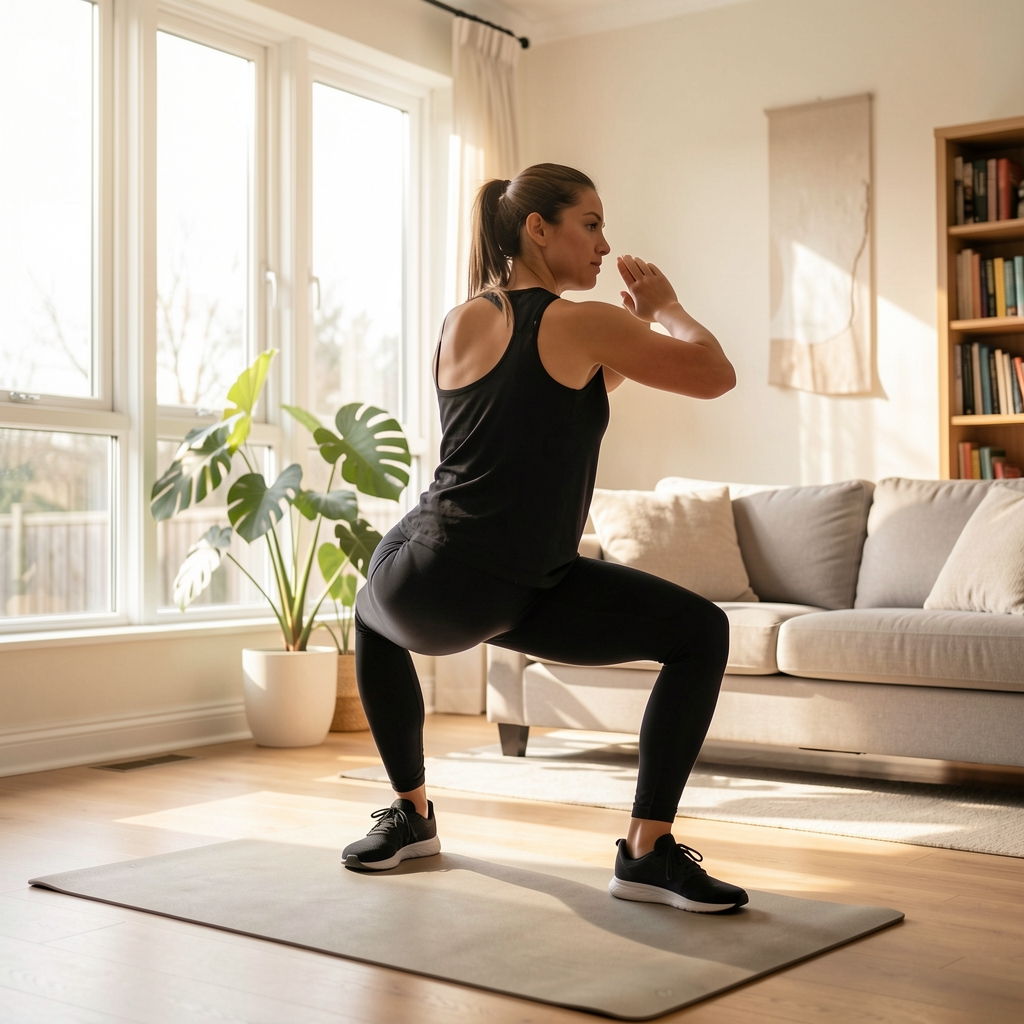
Programmes structured around compound movement patterns — push, pull, hinge, squat, carry. Each session references a documented progression model, indexed by volume and density.
Interval protocols derived from published work-to-rest ratios. Sessions range from 14 to 28 minutes, structured around circuit density and active recovery windows.
14–28 minInterval Based
Category 03
Flexibility & Mobility Flows
Joint mobility sequences and static hold protocols organised by anatomical region. Documented for desk workers, morning routines, and post-session recovery.
Joint MobilityRecovery
Category 04
Resistance Band Protocols
Band resistance applied across primary movement patterns. Load anchored to band tension classification, with noted substitutions for each resistance tier.
Category 05
Core Strength Training
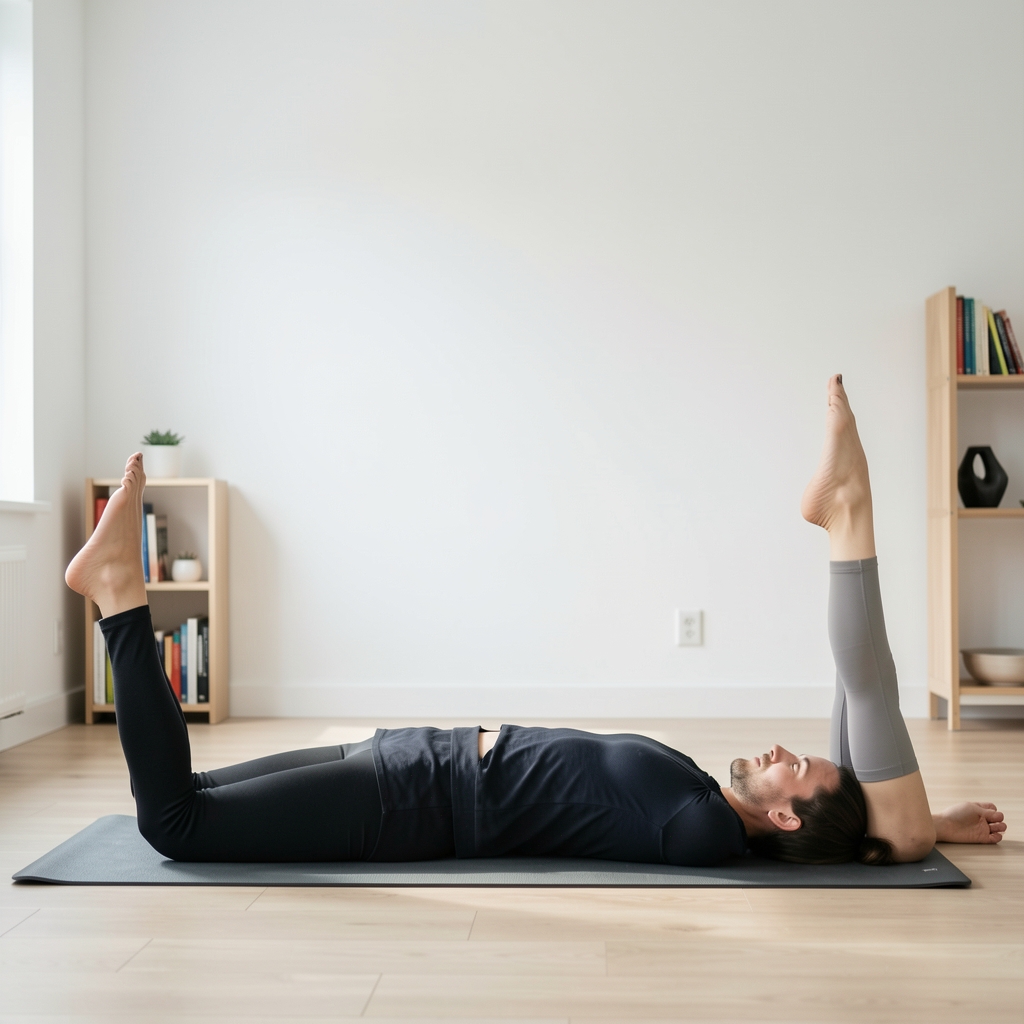
Anterior and posterior chain work, structured in timed and rep-counted formats. Each session isolates a primary stabilisation function with a secondary movement pairing.
Category 06
Postural Correction Work
Targeted sequences for desk workers and sedentary-pattern correction. References spinal alignment, shoulder positioning, and hip mobility as a composite set.
Oravelin operates as a documentation resource. Its programmes are drawn from peer-reviewed exercise science literature and arranged into accessible daily sessions. The organisation does not represent gym replacement — it represents structured movement calibration for the home environment.
Session sequencing follows progressive overload principles. Volume and intensity parameters are indexed week-to-week, with explicit rest protocols between effort blocks. The format keeps users on measurable trajectories rather than repeating static routines.
Each programme is accompanied by a written session brief — purpose, primary movement, secondary movement, and a note on common execution errors. That brief functions as a reference point, not a script. Adaptation to the individual is expected.
Questions collected from individuals beginning structured home movement routines. Answers follow the Oravelin reporting standard: precise, without overclaiming.
Each programme follows a block periodisation model. Sessions within a week share a consistent movement emphasis — for example, upper-body push on Monday and Thursday, lower-body hinge on Tuesday, and active recovery on Friday. Volume increases across each four-week block.
The majority of Oravelin sessions are designed for a standard yoga-mat footprint — approximately 60×180 cm. A few sessions in the advanced programme include lateral movement sequences that benefit from a 2m wide area, but alternatives are documented for restricted spaces.
HIIT sessions in the beginner programme operate at a 1:2 work-to-rest ratio — 20 seconds on, 40 seconds off. This is well within the range documented as suitable for individuals with limited cardiovascular exercise history. Intermediate and advanced ratios are higher density and are noted as such.
Each programme ships with a week-by-week reference grid. The grid notes the session, its primary focus, estimated duration, and the recovery day that follows. Users are advised to hold to the documented sequence rather than rearranging sessions to avoid consecutive high-intensity days.
The core library requires no equipment. Band progressions are an optional add-on documented separately for each relevant exercise. Where a resistance band adds value, the band-free variant is listed alongside it.
"
"Three weeks in, the progression model is the first thing I've followed that actually makes sense on paper. The session briefs cut out the guesswork entirely."